Picture this...it's early spring. Okay, it's still sort of late winterish, but anyway, you're itching to…
Walrus and Rarities and Bears, Oh My!
A report of our spring 2025 tour to Gambell, on St. Lawrence Island.
Sitting at the northwest tip of St. Lawrence Island in the northern Bering Sea—just 36 miles from Russia—Gambell is one of Alaska’s most exciting destinations during migration. Gazing across the Bering Sea, we hope for winds favorable to bring birds from the east. Each trip is different and you never know what birding riches the island will provide!
This spring, we experienced a variety of weather conditions during our tour, which can be a good thing for bringing in birds. A mix of rain, snow, and sleet, combined with driving wind, was a dominant feature of the first few days of the trip. Then the weather settled into several days of light and variable winds and dry conditions, including a couple of days of full sun. The result of these conditions was great seawatching early in the trip, and excellent birding conditions and a solid list of rare birds late in the trip.
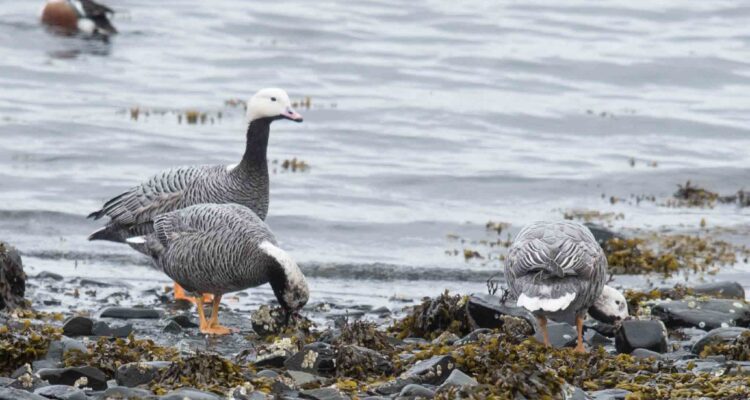
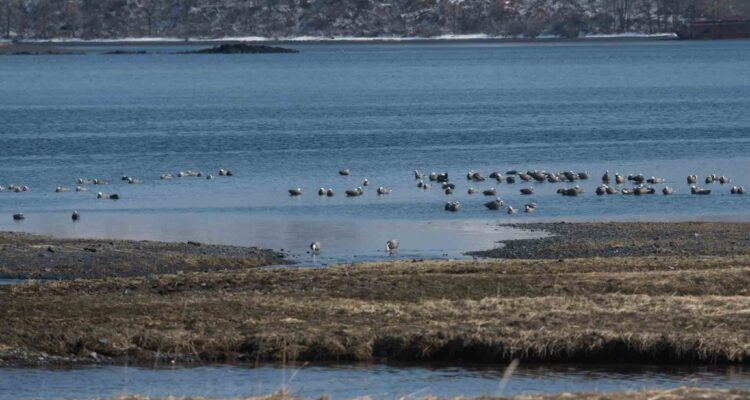
As we do on all Gambell tours, we started each morning with a seawatch off the west beach to witness the large numbers of alcids flying by and to scan for loons, eiders, gulls, and shorebirds. This year, our fortitude at the beach paid off with COMMON, KING, STELLER’S, and a single drake SPECTACLED EIDER! We recorded the recently split STEJNEGER’S SCOTER at several seawatches, and an afternoon seawatch early in the week produced 25+ ARCTIC LOONS. Other seawatch goodies included YELLOW-BILLED LOON, EMPEROR GOOSE, ANCIENT MURRELET, SABINE’S GULL, BLACK GUILLEMOT, and DOVEKIE!
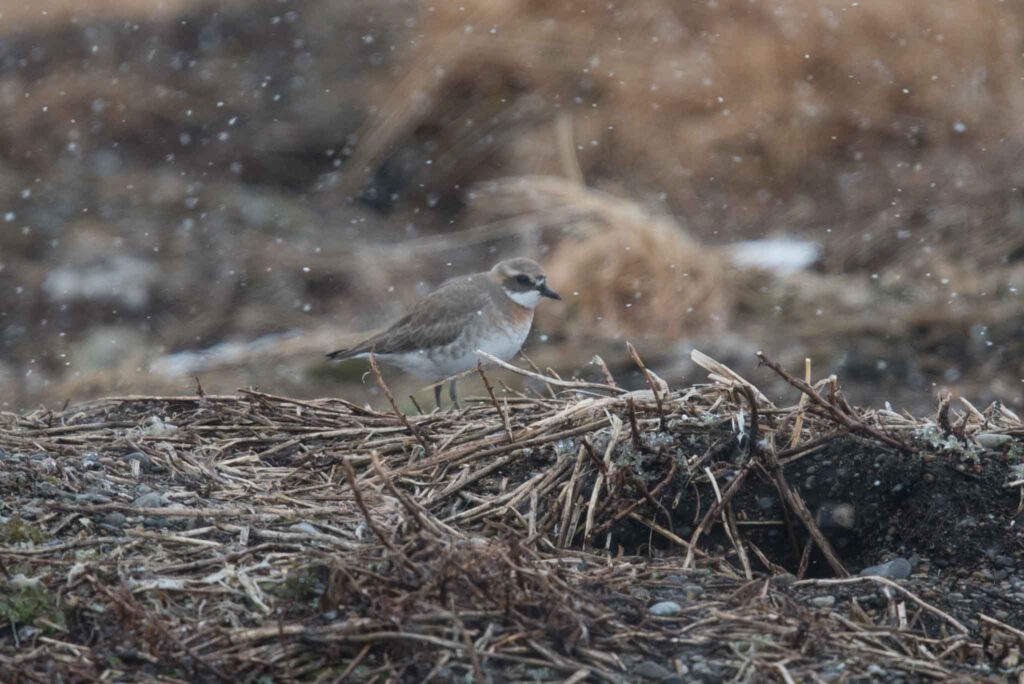
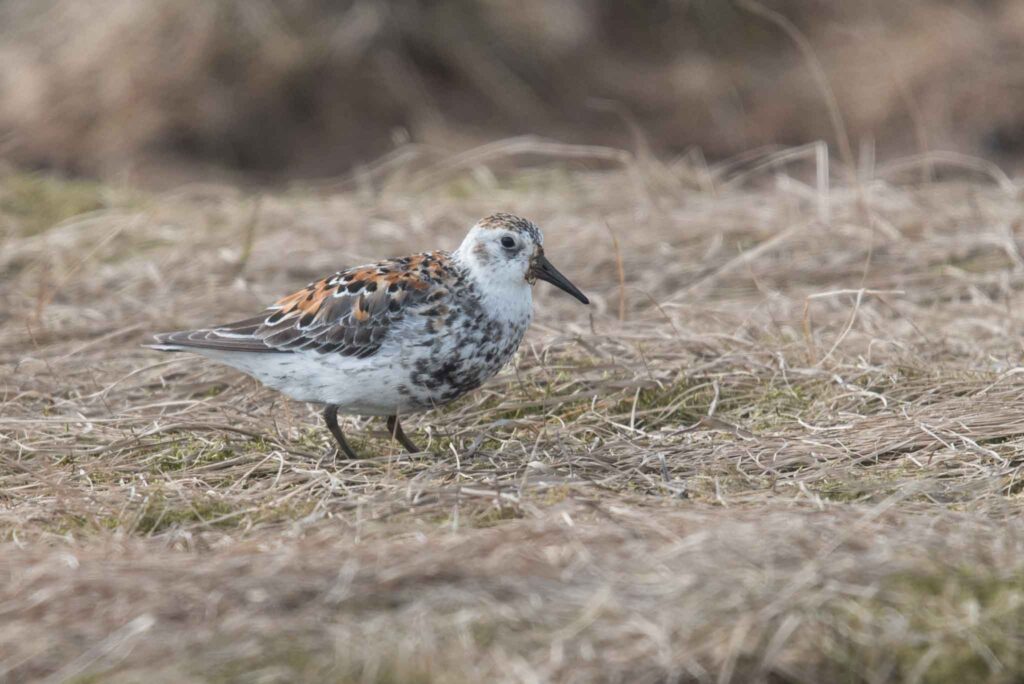
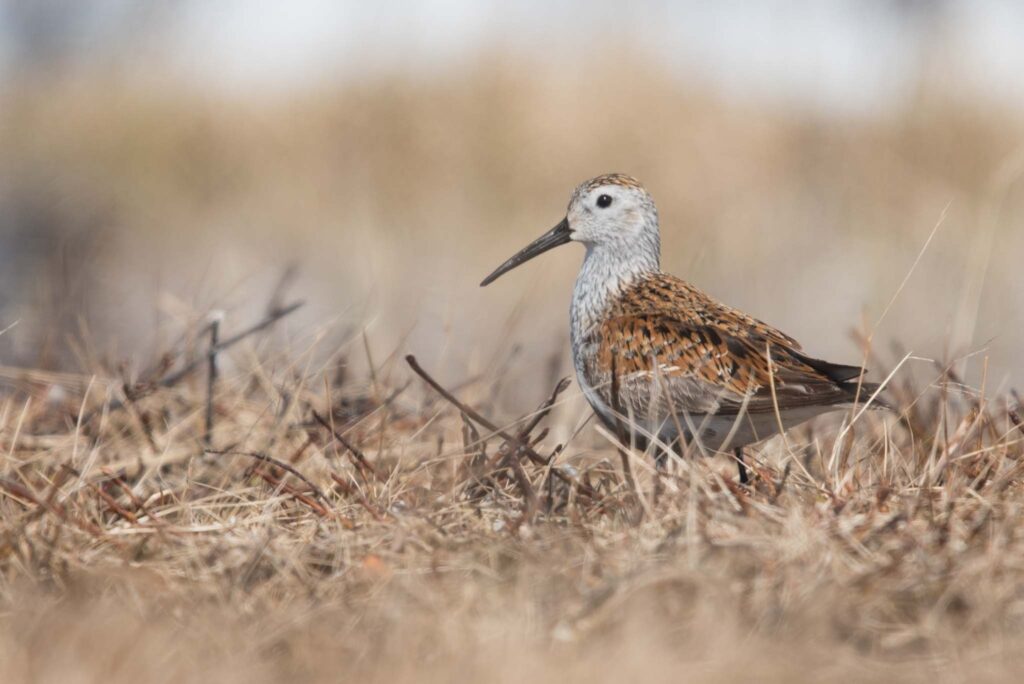
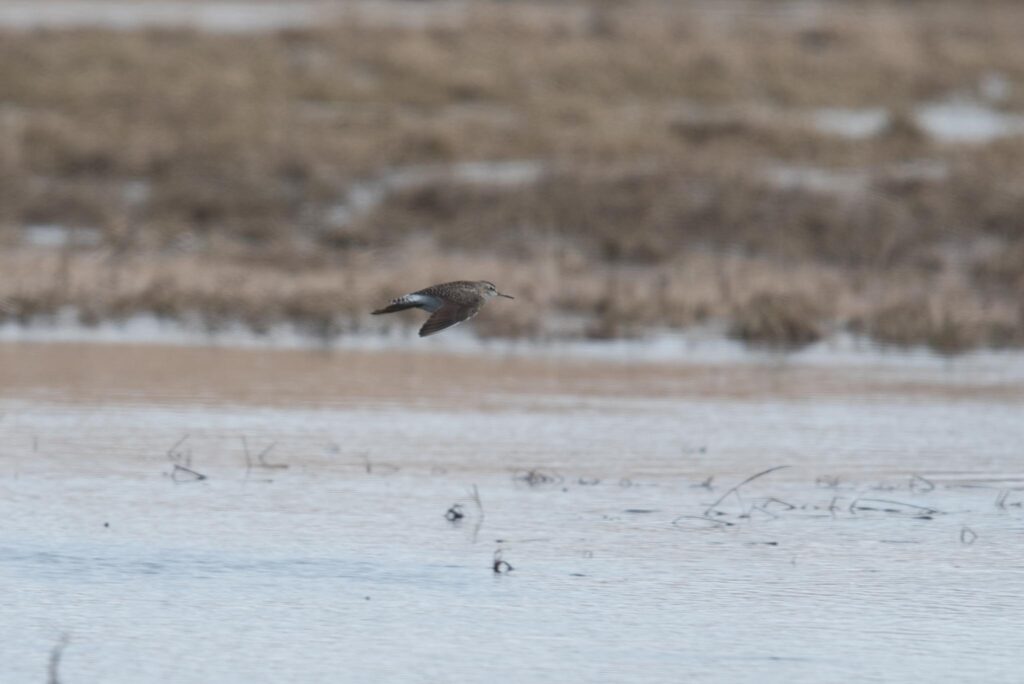
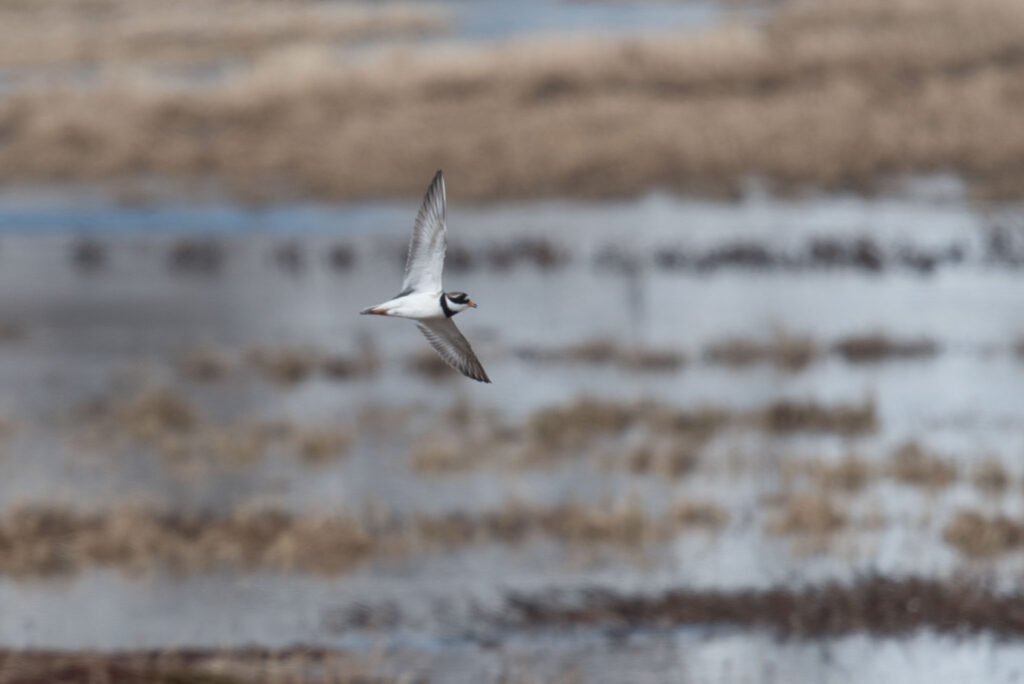
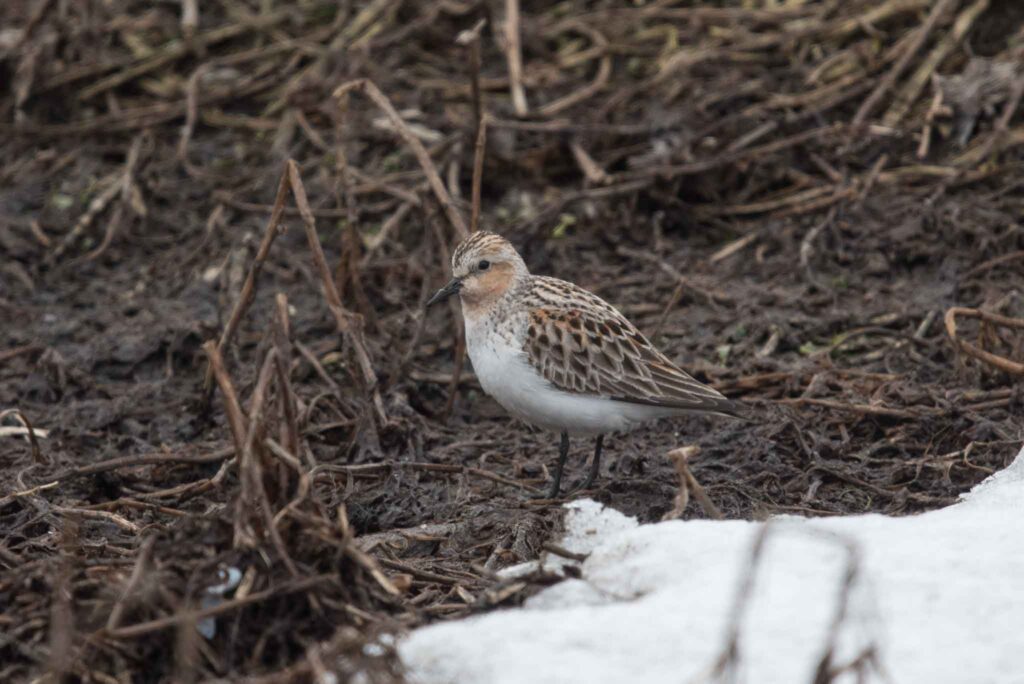
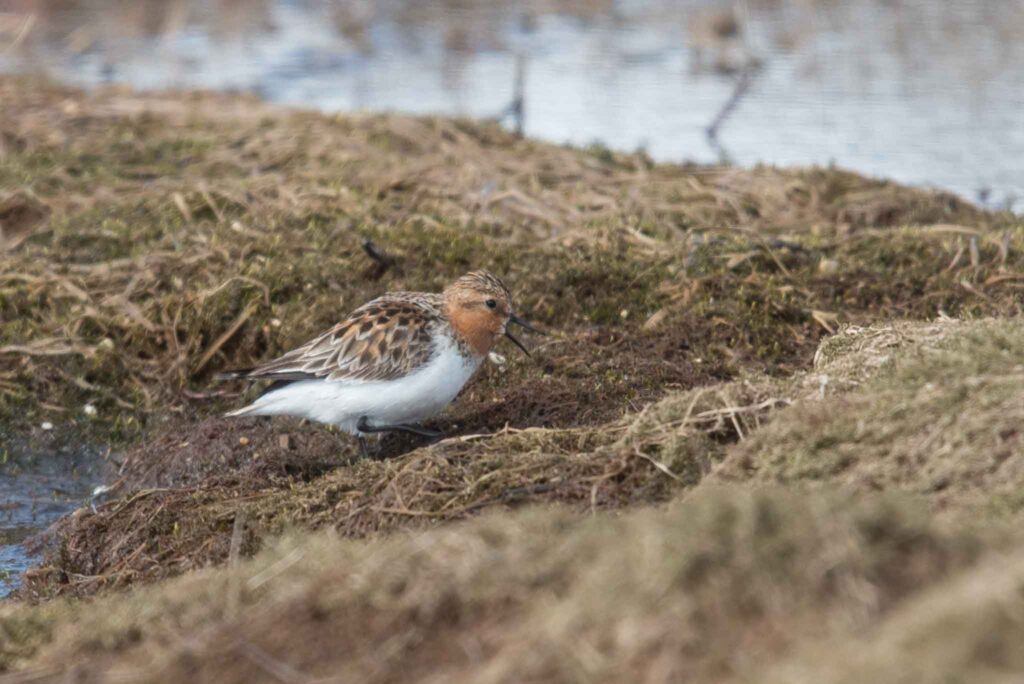
The rare shorebirds started early on this trip with a COMMON SNIPE in the near boneyard on the first afternoon and a SIBERIAN SAND-PLOVER on the second day. On day four, a WOOD SANDPIPER and a RED-NECKED STINT were found at the south end of the lake, as well as a pair of COMMON RINGED PLOVERS. Common Ringed Plovers breed in small numbers at Gambell, and Red-necked Stints are regular migrants, but Wood Sandpipers are vagrants we record only every few years.
One evening, just as we were finishing dinner, the local medical professional and avid birder, busted through the lodge door to tell us about a polar bear on an ice flow just off the point. We immediately suited up and rallied to the point where sea ice was floating by and piling up on shore. There on the ice was indeed a polar bear, killing a spotted seal! The bear was about 1/3 mile away out on the ice, so we were able to safely watch it from shore with great views through the scopes. At least 14 walrus were also present on the ice pack. We occasionally see walrus from shore at Gambell, especially when there is ice around, but this is the first time in over 30 years of Gambell birding tours that we have seen a polar bear! The evening was perfectly calm and clear. Thousands of CRESTED AUKLETS streamed by the point in perfect light as we watched walrus and the polar bear. This was one of the most memorable nights I’ve ever spent at Gambell!
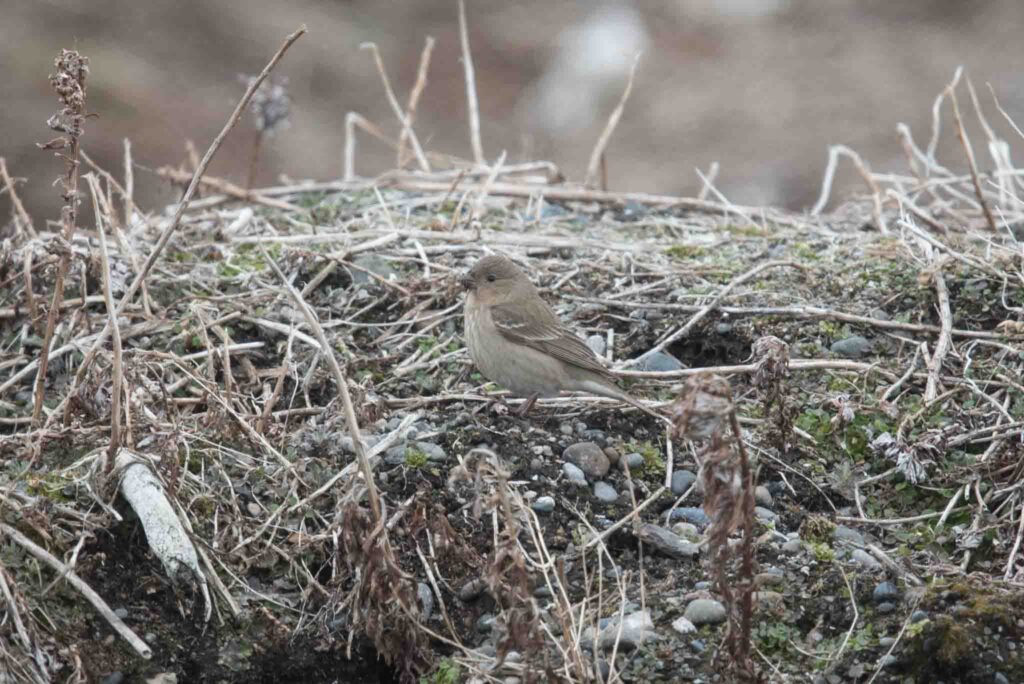
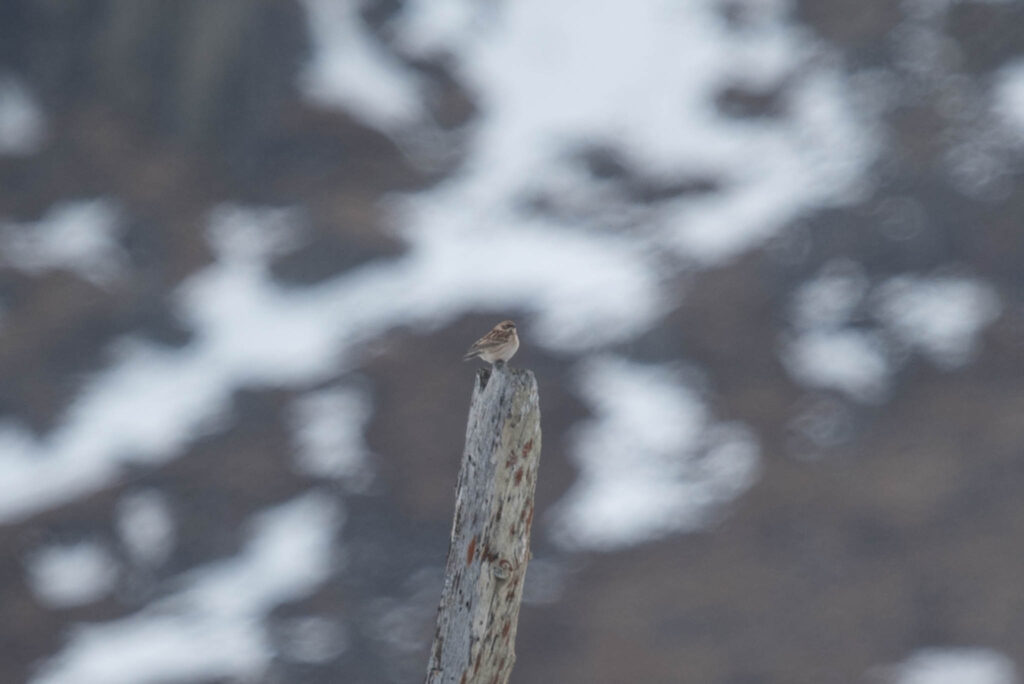
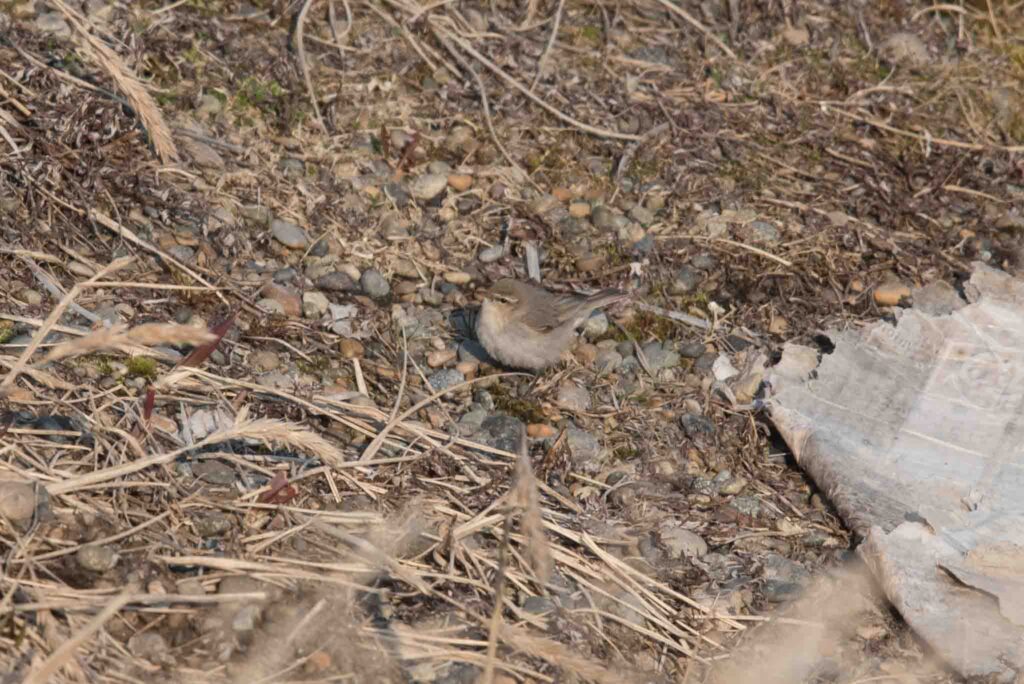
With the rare shorebirds and incredible mammal sightings, the trip already ranked as a great one. But near the end of the trip, we got a few days of light winds and clear skies. Conventional wisdom is that west winds are the best winds at Gambell. This is mostly true, but very often calm conditions with no wind, or only very light wind from any direction, can allow birds to find their way to the island. The change in weather from moderate winds to extended calm conditions is exactly what we needed. In the last few days of the trip, we found several rare birds that promoted this trip list to one of the best we’ve ever had! Late in the day on June 5, the call came in over the radio of an ARCTIC WARBLER in the Near Boneyard. We hustled over to try to see this regular, but late migrant. While trying to relocate the warbler, we turned up a COMMON ROSEFINCH! (We later found the warbler, too). The next day of birding failed to produce anything new until late in the day when our after-dinner outing kicked up a fairly cooperative COMMON CHIFFCHAFF in the Circular Boneyard! And on the final full day of the trip, we found up a female PALLAS’S BUNTING in the Boatyard, only the third spring record for Gambell and about the 11th record for North America. The Pallas’s Bunting was only around for about five minutes, but showed well for all who were present!
It was an amazing trip with a truly great group of folks! This is one I’ll remember for a long time, and I already can’t wait for next spring! An eBird trip report of the tour can be found here.
Related Posts