Picture this...it's early spring. Okay, it's still sort of late winterish, but anyway, you're itching to…
A Rarity Extravaganza at Adak Island!
We’ve led over 20 birding tours to Adak Island in both spring and fall since 2008. It’s one of our favorite places. This year, however, we offered our first mid-winter trip to the Island. By all metrics, it was an absolute success! Great weather–check. Flawless logistics–check. Fantastic company–check. Rare birds–check, check, checkity-check-check-check!
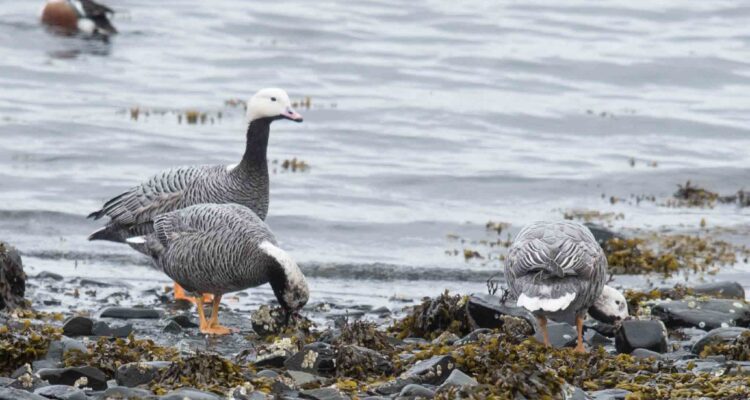
The main goal of this trip was to find WHOOPER SWANS, an Asian species that regularly winters in the central Aleutian Islands in small numbers. As swans go, Whooper Swans are the awesomest! Adak Island is a large island and is full of lakes and swan habitat. We hoped that in December, many of the smaller lakes would freeze and the swans would find haven on the larger bodies of water near the road system that remain open throughout the winter. Lake Andrew is typically the most reliable Whooper Swan location on the island, and it was there that we found the Whoopers on three of our five days on the island! In addition to Whooper Swans, Adak is the winter home to a long list of interesting waterfowl. EURASIAN WIGEON and EURASIAN (GREEN-WINGED) TEAL are common. Small flocks of EMPEROR GEESE are present. And we also had great success with TUFTED DUCKS, finding up to eight birds each day of our trip. A HOODED MERGANSER on Lake Andrew on the first afternoon was a fantastic rarity in the Central Aleutians! So far, the trip was just ducky!
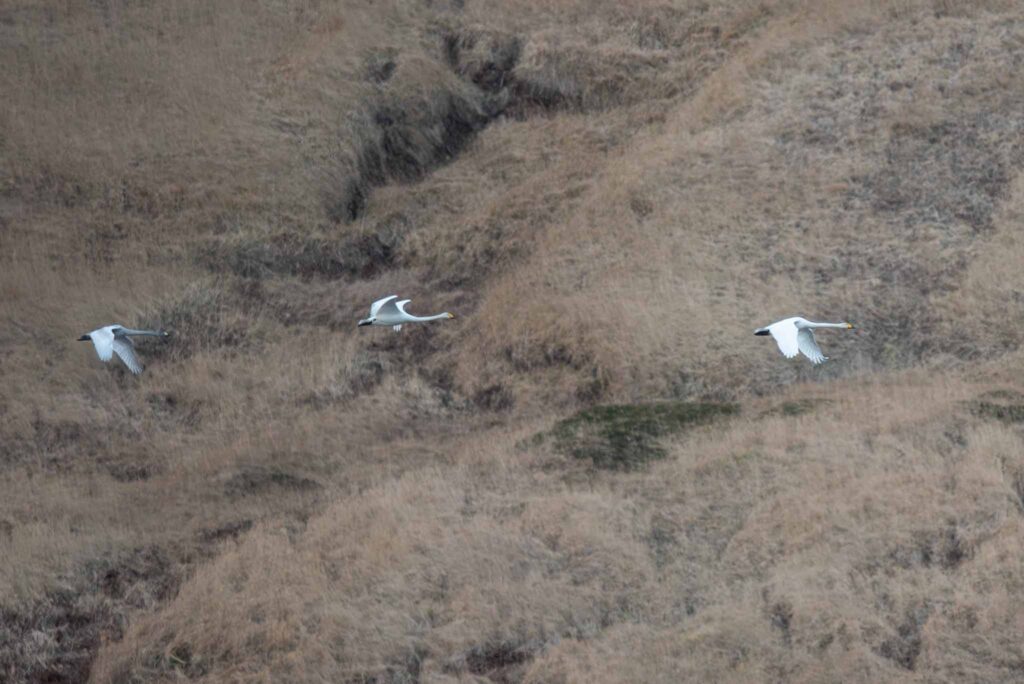
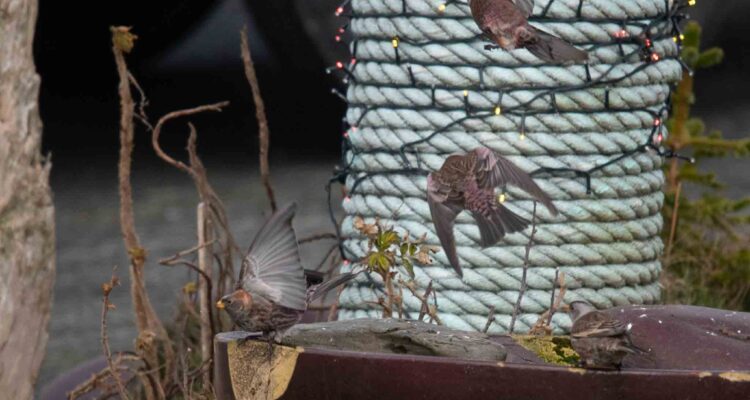
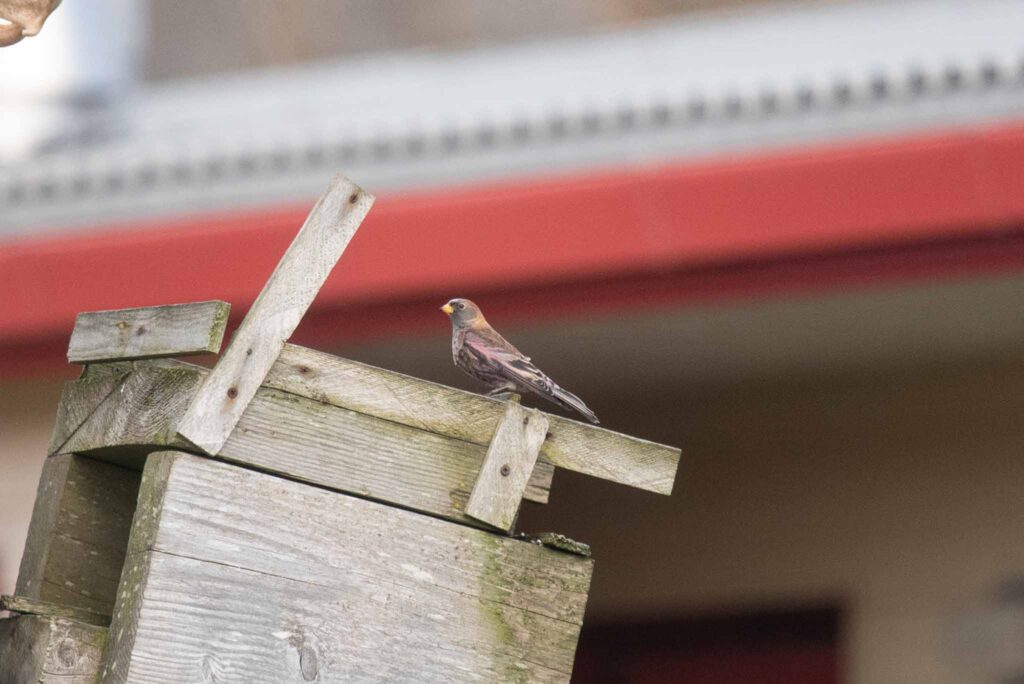
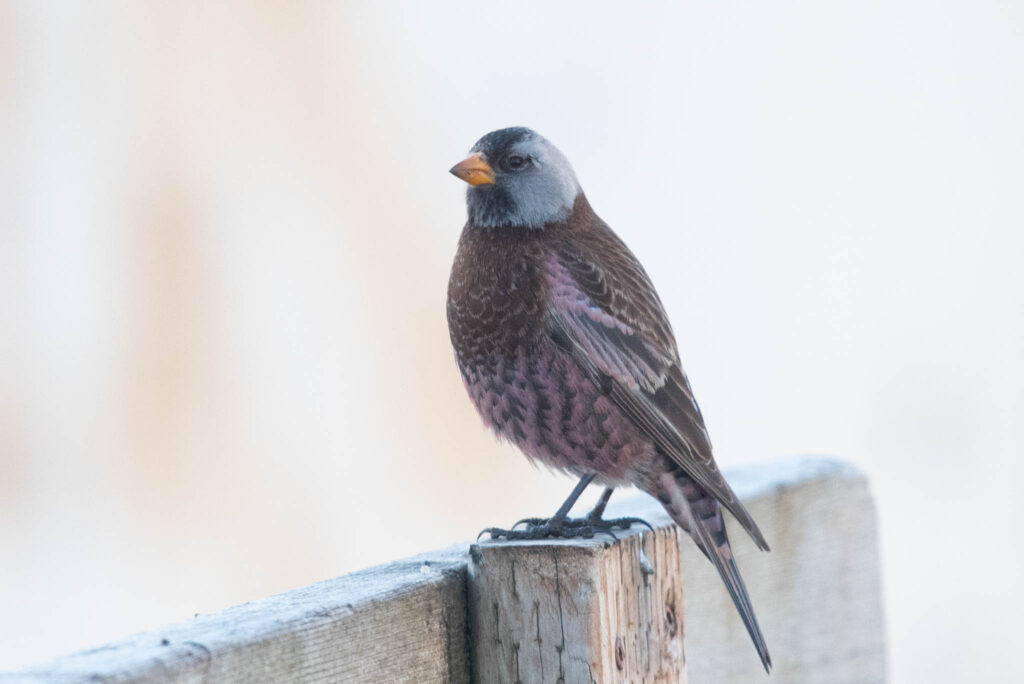
Had we just found Whooper Swans, Tufted Ducks, and Emperor Geese, the trip would have been a success. However, earlier in the winter, several fantastic rarities had been reported, and we were hoping that at least one of them would stick around for us. And so our very first stop on the island was a bird feeder, where just a few days before our trip, the third documented record of ASIAN ROSY-FINCH had begun making daily visits. This rarity was found in late November just outside of town and was not seen again until a few days before our trip, when it showed up at the only year-round bird feeder on Adak! Lucky for us!
We toasted the Asian Rosy-Finch over dinner and slept well and long (sunrise doesn’t come until around 9 AM in mid December). After a fine breakfast, the plan for our first full day on the island was to concentrate on the several planted spruce groves on the island to look for the EURASIAN SPARROWHAWK that was found in late November and seemed to be hanging around. Sometimes plans work out quite well. Early in the day, after completing a very short walk around the “Adak National Forest,” someone spotted a small hawk soaring overhead. We all got our binoculars on it and enjoyed a long look and a few photos of only the 3rd documented record of Eurasian Sparrowhawk for Alaska and North America! (The other two records are also from Adak Island.) We ended up seeing and photographing this bird multiple times over the next three days. What a bird!

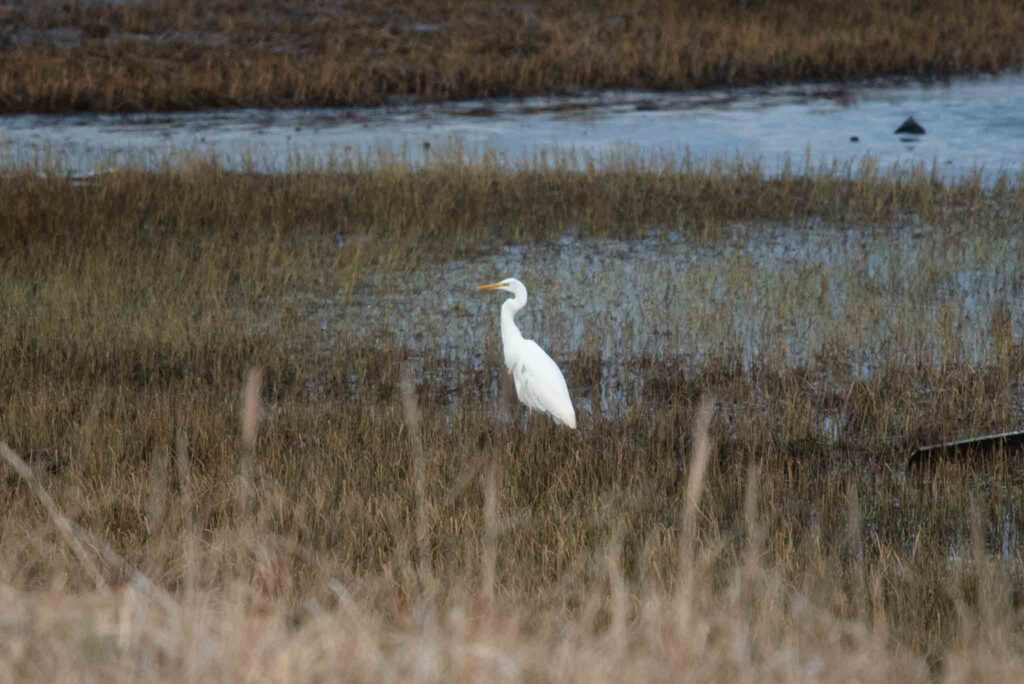
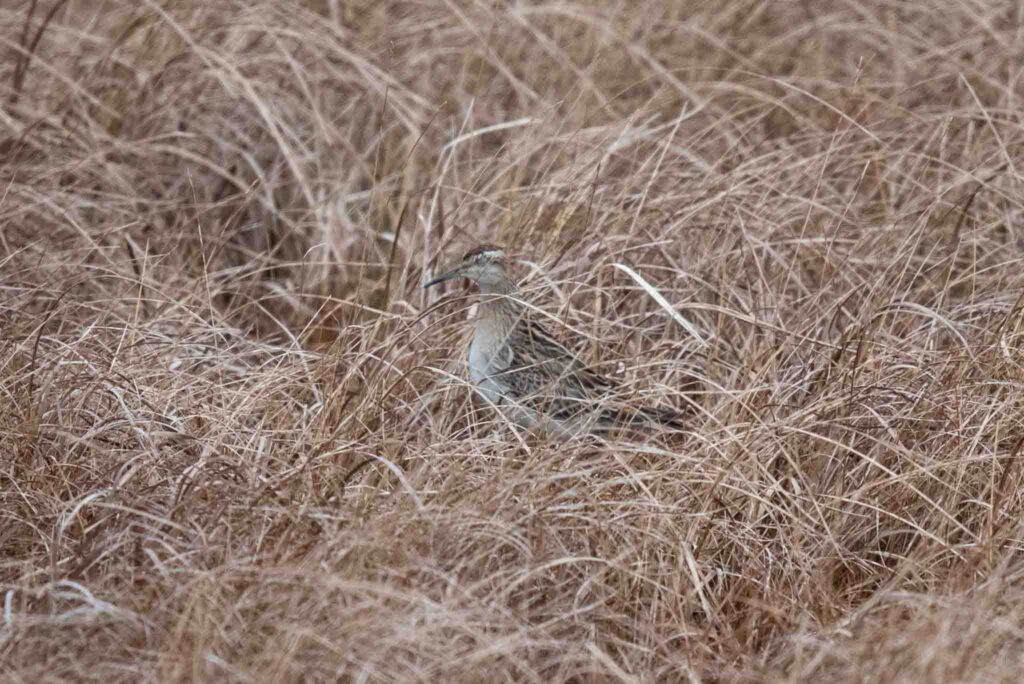
So in the first twenty-four hours of our trip, we located a family of WHOOPER SWANS, got great looks of North America’s third ASIAN ROSY-FINCH, and had a thrilling encounter with a EURASIAN SPARROWHAWK, also the third record for North America! The next three days then became a very relaxing survey of Adak’s wintering birds in mostly excellent weather, including light winds and a bit of sun. There was no rain on this trip! We finished up the survey with an even 50 species. This included an unseasonably late SHARP-TAILED SANDPIPER, two GYRFALCONS, several RED-FACED CORMORANTS, a very out-of-range BELTED KINGFISHER, a slightly out-of-range SURF SCOTER, and an amazing 11 GREAT EGRETS! Great Egret is casual to Alaska, with previous records originating from both North American and Asian sources. Earlier this fall, typhoon Halong pounded western Alaska, dropping an unprecedented flight of Great Egrets in Alaska. All of the birds we studied appeared to be from the Eurasian Subspecies modesta.
I think we should run this trip again. Adak Island is truly a winter wonderland for birders!
Here’s a link to our eBird trip report.
Related Posts